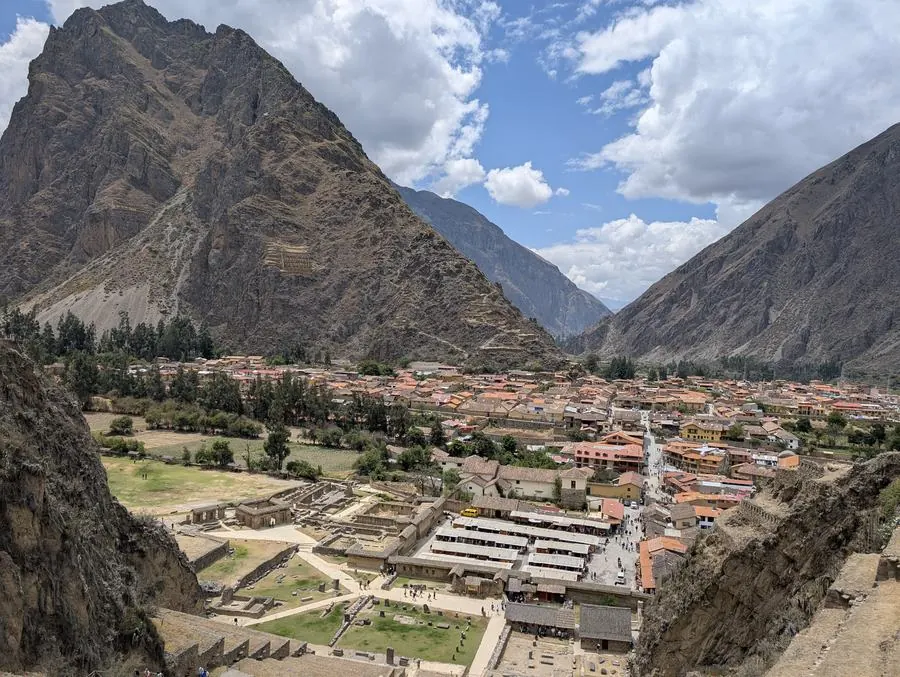
Mid-morning — Ollantaytambo
Ollantaytambo is one of the most remarkable places in Peru — and most visitors spend too little time here because they're rushing to fit everything in.
This was a living Inca town. The cobblestone streets, the water channels running through the village, the massive ceremonial terraces above — all of it built by the Incas and still inhabited today. Walking through Ollantaytambo isn't visiting ruins. It's walking through a town that has been continuously occupied for over 700 years.
The fortress above the town is where the Inca Manco successfully defeated a Spanish cavalry charge in 1537 — one of the few military victories against the conquistadors. Standing on those terraces, looking down at the valley, that history feels very real.
We don't rush this one. If your group wants more time, we stay.
Late morning — Drive to Moray
The drive between Ollantaytambo and Moray takes you through some of the most beautiful landscape in the Sacred Valley — green fields, snow-capped peaks, small villages. Worth having your camera out.
Midday — Moray
Nothing quite prepares you for Moray. You're driving through open farmland and then suddenly — circular terraces descending 30 meters (98 feet) into the earth, perfectly concentric, like something from another world.
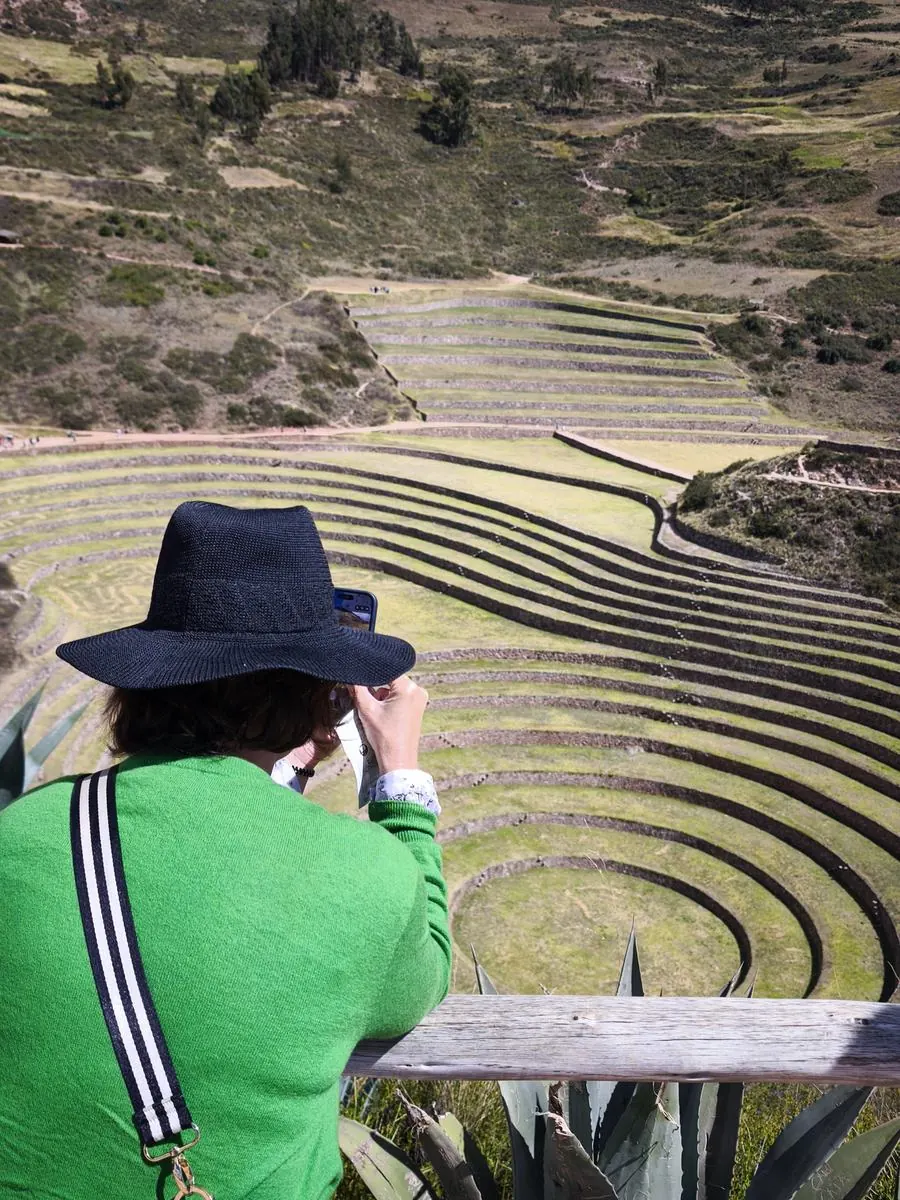
The Incas built this as an agricultural research center. The circular design creates different microclimates at each level — temperature differences of up to 15°C (27°F) between the top and bottom terraces. They were essentially running controlled experiments on crops across different climate conditions, 500 years before modern agricultural science.
Most visitors just glance from the rim and move on. Walk down into the terraces — the perspective from inside is completely different, and it's worth taking your time.
Early afternoon — Maras Salt Pans
The drive from Moray to Maras takes about 20 minutes. What you find there is one of the most visually striking landscapes in Peru.
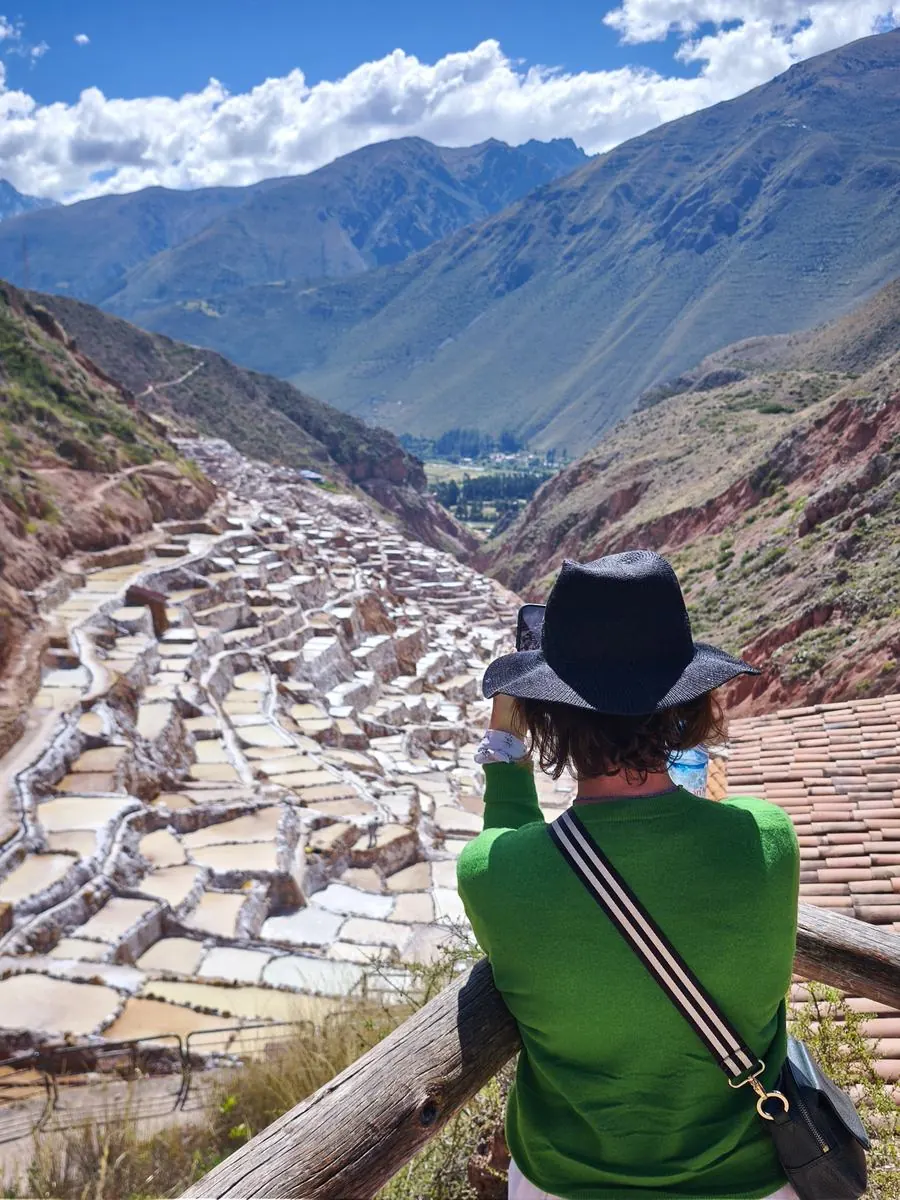
Over 3,000 individual salt pools, hand-carved into a mountain slope, fed by a single underground saltwater spring. Local families have been working these pools using the same technique for centuries — some of the same families whose ancestors worked them under the Inca empire.
The light in the afternoon turns the pools different shades of white, pink, and amber. Photographers never want to leave.
Unlike most sites in the Valley, the entrance fee at Maras goes directly to the local community — the families who maintain the pools. Worth knowing.
Late afternoon — Chinchero (optional, if time allows)
If we're ahead of schedule and your group still has energy, we can add a short stop in Chinchero. It's entirely optional — many days we skip it and stay longer at the sites above.
The drive from Maras to Chinchero takes about 30 minutes, climbing back up to one of the highest towns in the Valley at 3,762 meters (12,343 feet).
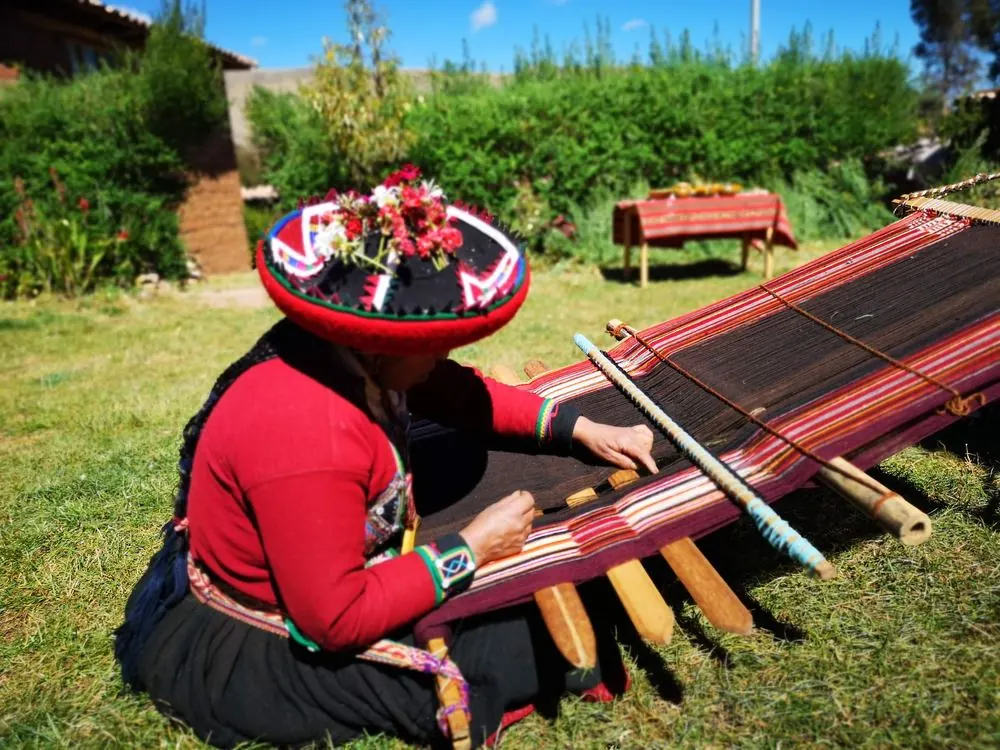
Chinchero is still a working Andean village — this isn't a recreated "cultural experience," it's daily life. Women here still spin and dye wool using techniques passed down for generations, and you'll often see weaving demonstrations using plants and minerals for natural dye, the same way it's been done for centuries.
The site itself sits on Inca foundations — massive stone walls that the Spanish built directly on top of, topping them with a colonial adobe church. Inca stonework holding up a 16th-century church is exactly the kind of layered history the Sacred Valley does better than almost anywhere else.
If it's a market day, the plaza fills with color — but even on a quiet day, the terraces and the mountain backdrop make it worth the stop.
Evening — Return to your hotel
Drop-off directly at your hotel in Urubamba or Ollantaytambo. No return drive to Cusco. You're home in the Valley, wherever that is for you.